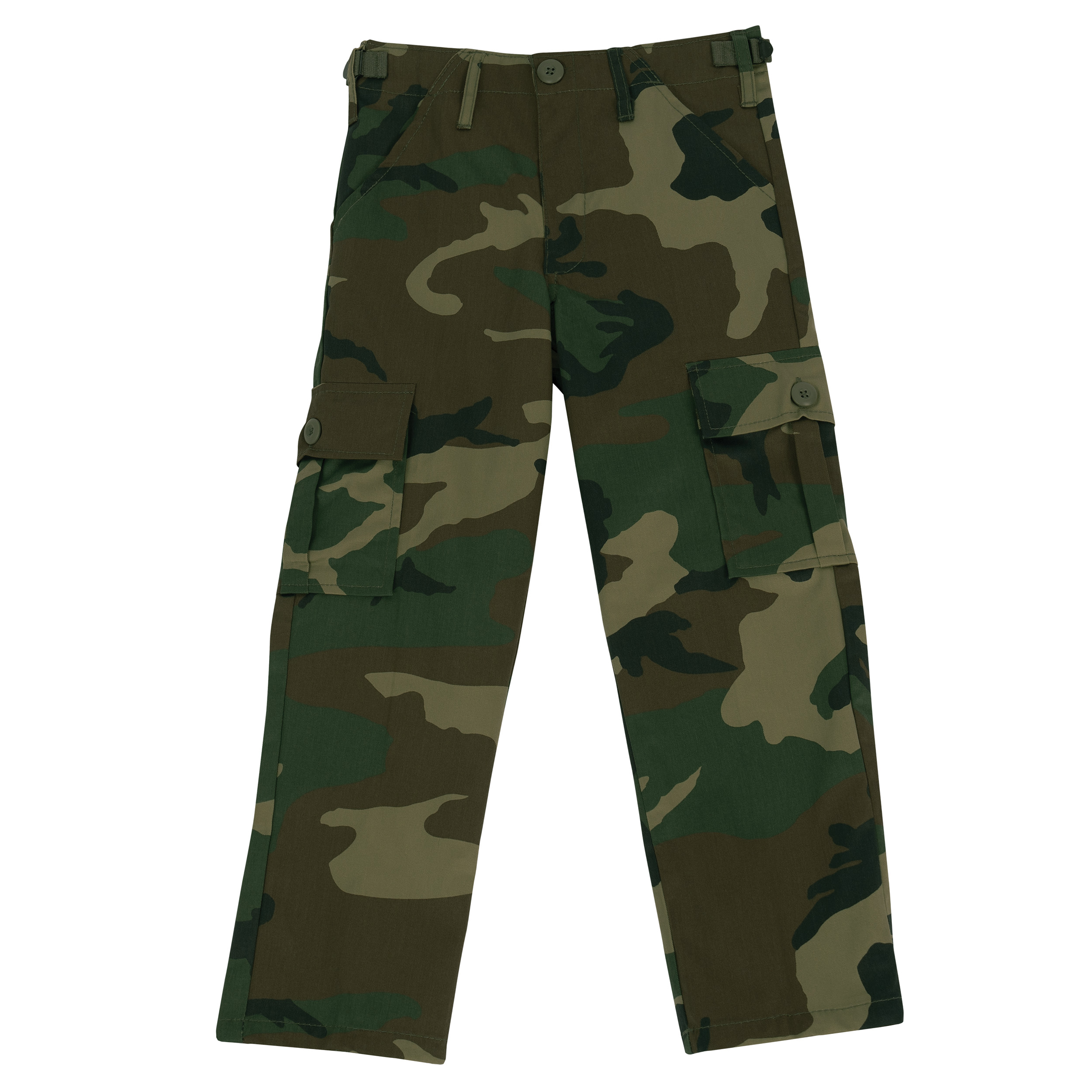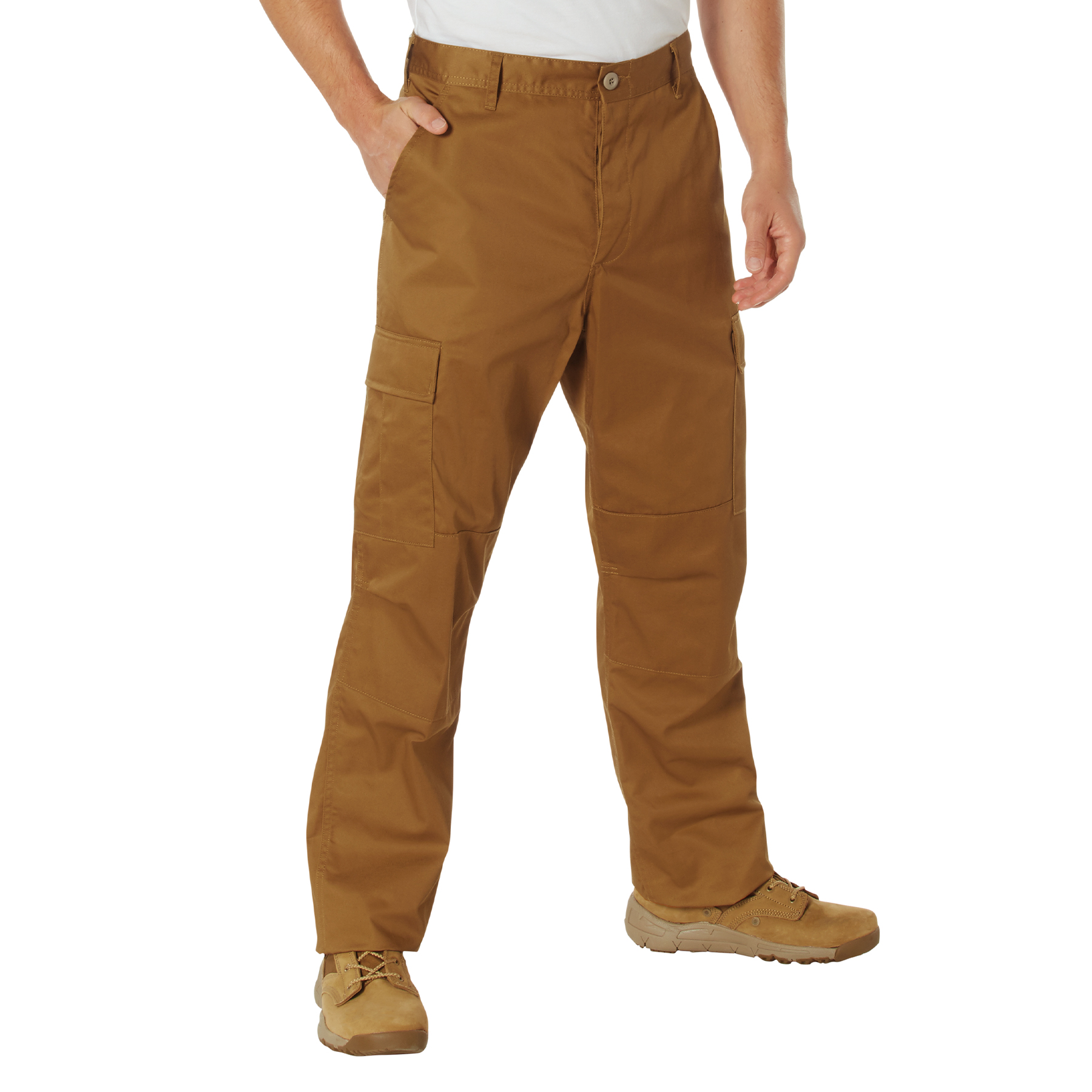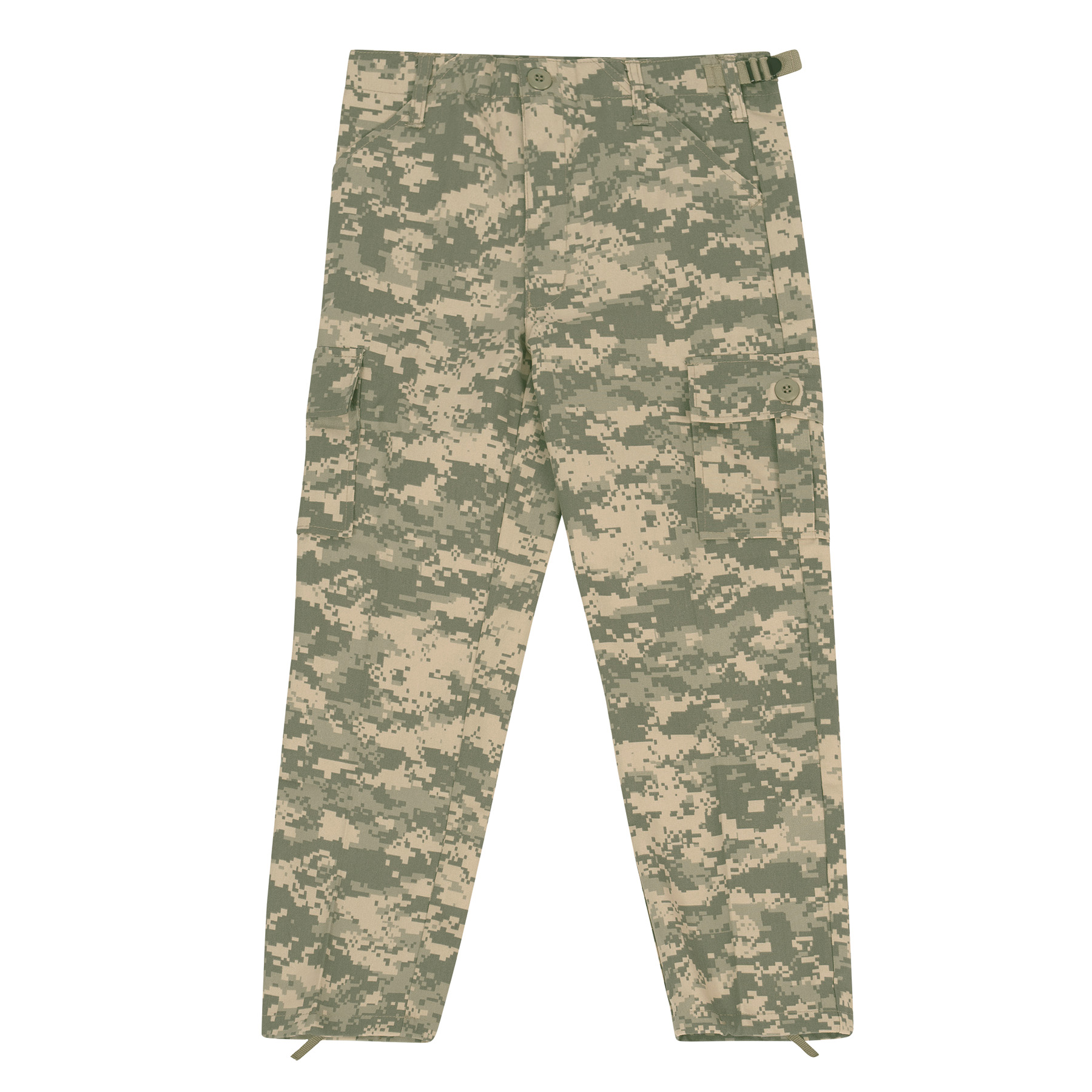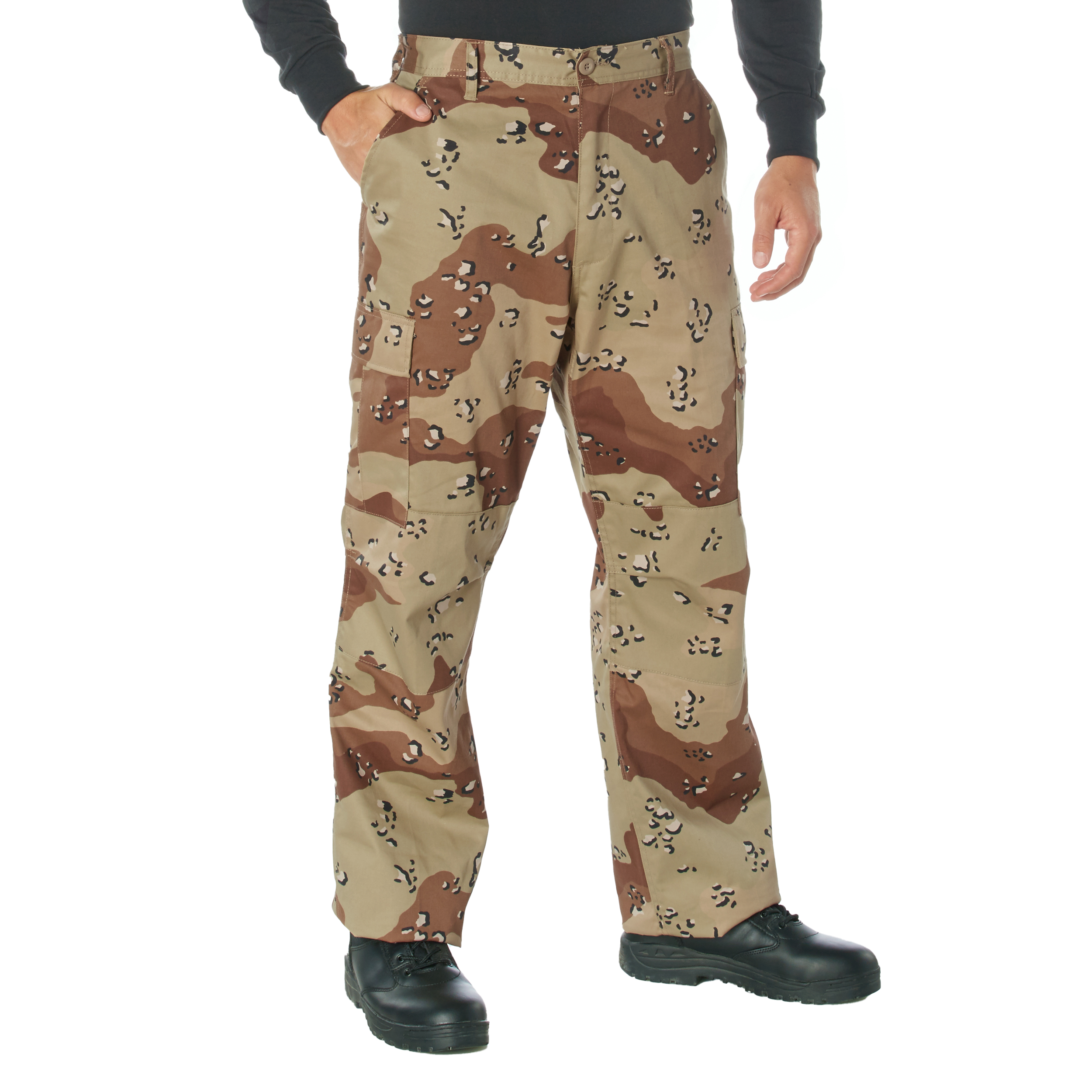
BDU Pants Sizing Guide
BDU pants run differently than your average pair of jeans or chinos, and the sizing system trips up a lot of first-time buyers. Get this right before you order and you’ll skip the return shipping entirely.
How BDU Sizing Works
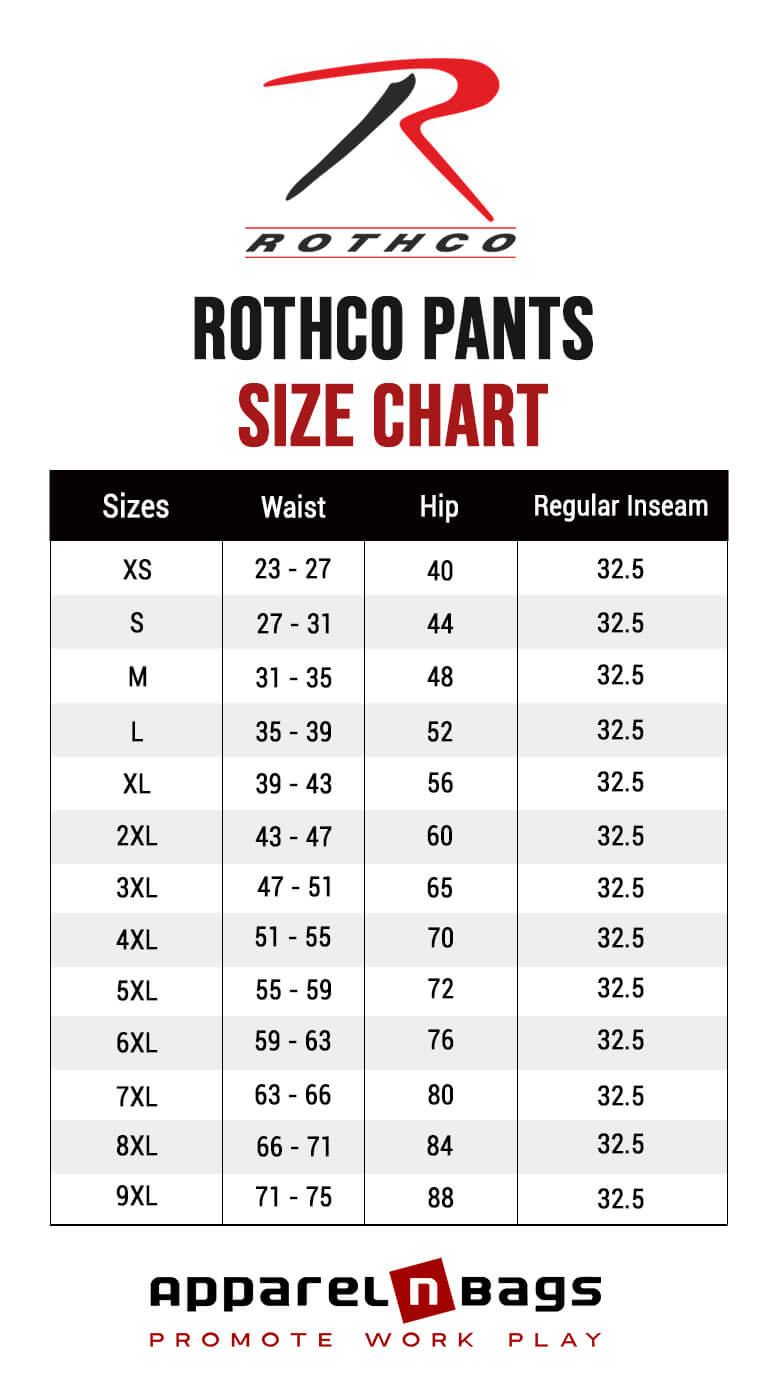
BDU pants use a two-number system: waist and inseam, written as something like 32-33. Unlike standard pants where the second number is your actual inseam length, BDU sizing uses inseam ranges to account for the adjustable waist tabs and roomier cut through the leg and seat.
| Size | Waist Size | Typical Range | Inseam Range |
|---|---|---|---|
| XS | 27–30 | 23–27 | 29–32 |
| S | 31–34 | 27–31 | 29–32 |
| M | 35–38 | 31–35 | 30–33 |
| L | 39–42 | 35–39 | 31–34 |
| XL | 43–46 | 39–43 | 32–35 |
| XXL | 47–50 | 43–47 | 32–35 |
All measurements in inches
Measuring Yourself Correctly
Take these measurements before you buy:
Waist: Measure around your natural waistline, not where your jeans currently sit. BDU pants are designed to sit slightly higher, around the navel, so measure there.
Inseam: Measure from your crotch to where you want the pant leg to end, typically at the top of your boot. If you’re between sizes on inseam, size down since most BDUs have a generous hem you can let out.
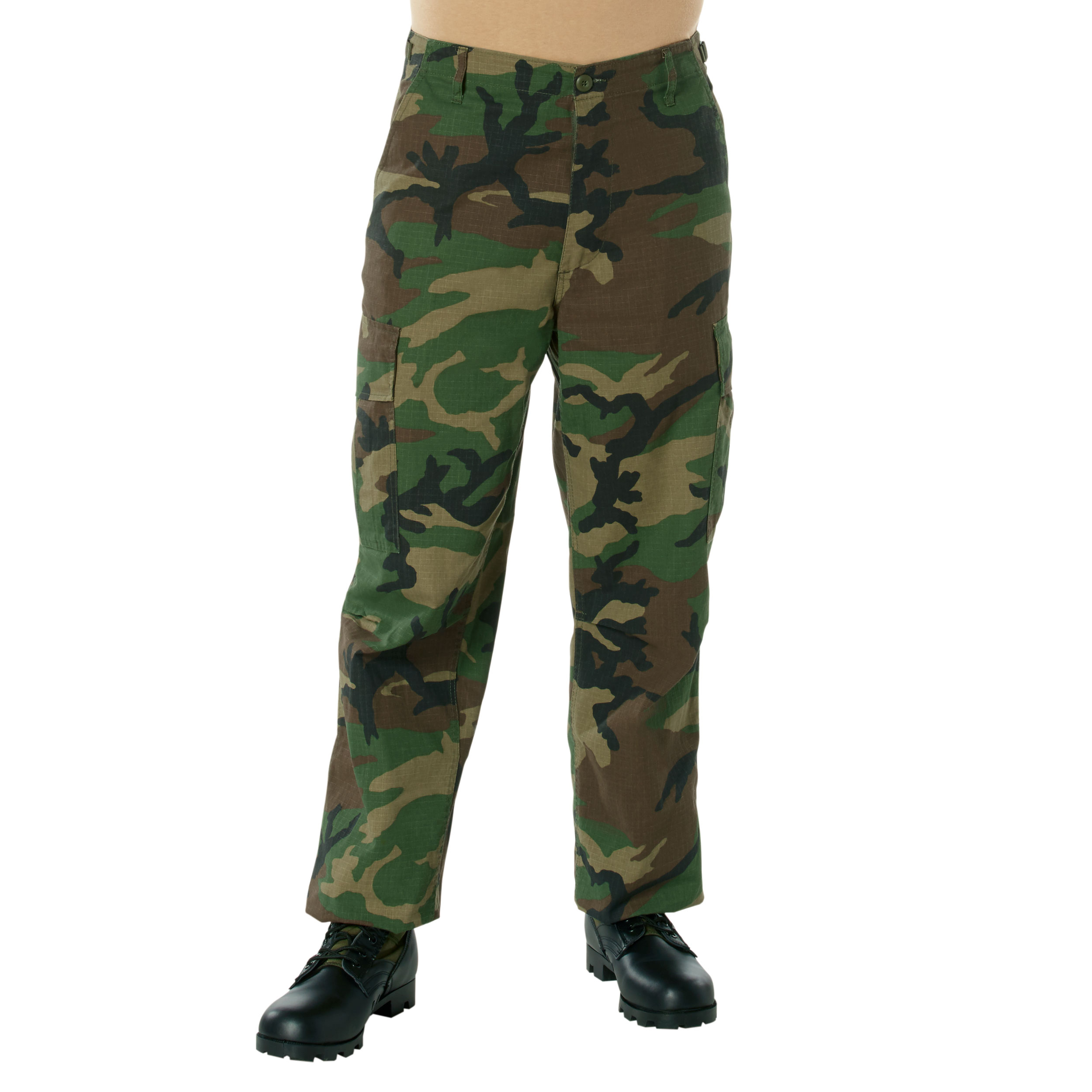
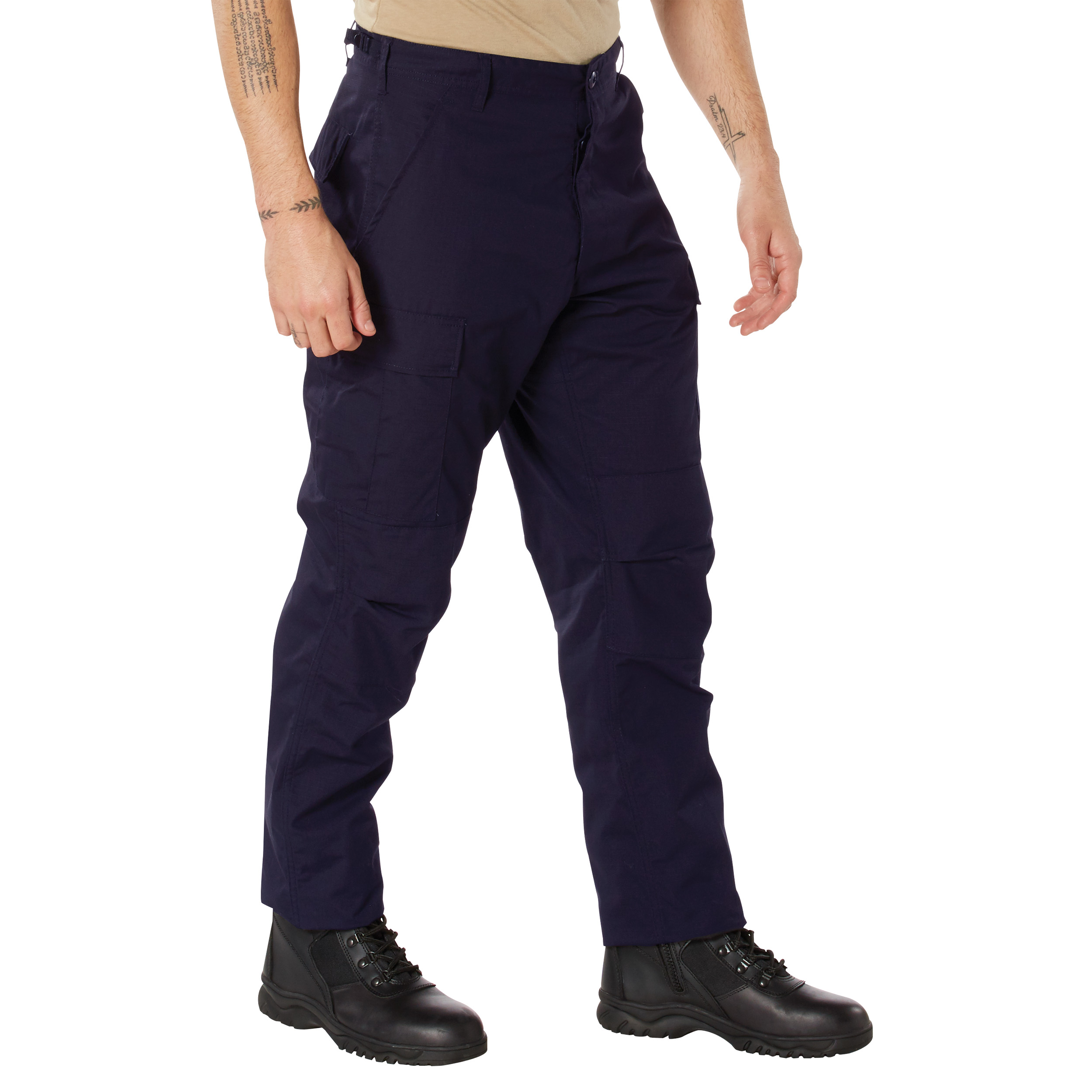
Hip and thigh: BDUs are cut roomy through the seat and thigh to allow for movement, gear belts, and layering underneath. If you have a larger build through the hips, this room works in your favor rather than against you.
Adjusting Fit After Purchase
A few things to know once your pants arrive:
The internal waist tabs (usually on the sides) let you take in or let out the waist by an inch or two in each direction. Use these before assuming a size is wrong.
BDU pants shrink slightly after the first wash, especially cotton ripstop versions. Order true to your measured size rather than sizing up to account for shrinkage, since the tabs give you adjustment room either way.
If you’re ordering for tactical or duty use with a gear belt, consider sizing the waist slightly larger than your jeans size. The belt and pouches add bulk, and a slightly looser pant accommodates that better than a snug fit.
When to Size Up or Down
Size up if you plan to layer thermal underwear or base layers underneath during cold months, or if you carry gear on your belt regularly.
Size down on the inseam if you’re between two ranges and prefer pants that don’t bunch at the ankle. Most BDUs can be hemmed if needed, but starting closer to your true length saves a tailoring step.
Stick with your measured size if you’re buying for everyday wear without heavy gear, since the standard cut already builds in room for movement.
FAQ
What does BDU stand for and does it affect sizing?
BDU stands for Battle Dress Uniform. It doesn’t change how you size, but it explains why the cut is roomier than civilian pants, since it’s built to accommodate gear and movement.
Are BDU pants true to size compared to jeans?
Not exactly. The waist tends to run close to true, but the overall cut through the hip, thigh, and seat is looser than most jeans of the same waist number.
Can I hem BDU pants if the inseam is too long?
Yes, BDU pants hem easily and most tailors can do it for a low cost. Many people also just cuff or blouse them over boots without hemming at all.
Do BDU pants shrink after washing?
Cotton ripstop versions can shrink slightly, usually less than half an inch in the waist and inseam after the first few washes. Poly-cotton blends shrink less.