
Military Surplus vs New Gear: What’s Worth Buying?
Surplus is real military issue, often decades old, pulled from storage and sold off when specs change or contracts end. New gear is made to current commercial standards, sometimes by the same factories that produce surplus, sometimes not. Both have a place. The trick is knowing when each one earns its price tag.
Side-by-Side Breakdown
Use Case
Surplus shines for field work, yard projects, hunting camp, or anything where you don’t mind gear that’s already broken in and might have a stencil or two on it. New gear makes sense when you need a specific fit, a specific color, or features that didn’t exist when the surplus item was manufactured, like modern MOLLE webbing or updated zipper hardware.
Durability
Genuine surplus was built to military specs, which usually means overbuilt canvas, heavy stitching, and hardware that takes abuse. A lot of it has already survived years of storage and handling and still holds up. New gear varies widely. Premium reproduction pieces from brands like Rothco often match or beat the original surplus in stitching and materials, while bargain-bin new gear can fall apart faster than a 40-year-old field jacket.
Price
This is where surplus used to win big, but the gap has narrowed. True vintage surplus in good condition is getting harder to find and prices have crept up accordingly. New gear, especially reproduction pieces, often lands at a similar price point now with the benefit of consistent sizing and no surprise stains or repairs needed.
Fit
Surplus sizing follows old military charts, which run differently than modern clothing sizes, and often skew long or boxy. If you’re used to commercial sizing, expect to size down or try on before buying. New gear built to current patterns fits closer to what you’re used to off the shelf, with size charts that actually match your tape measure.
The Recommendation
If you’re after character, a lower price point on basics like field jackets or canvas bags, and don’t mind sizing quirks, hunt for surplus. If you need reliable sizing, specific colors, or modern features like internal pockets and updated buckles, go with quality new gear. For most people building a working kit from scratch, a mix works best: surplus for bags and outerwear where fit is forgiving, new gear for anything that needs to fit close to the body or integrate with other equipment.
FAQ
Is military surplus gear still good quality?
Genuine surplus was built to spec and often outlasts modern commercial gear, but condition varies a lot depending on age and storage, so check listings carefully.
Why is some surplus gear so cheap?
Governments periodically clear out warehouses when equipment specs change, dumping large quantities of serviceable gear onto the market at low prices.
Does surplus sizing run small or large?
Most military surplus runs long and boxy compared to modern commercial sizing, so check measurements rather than relying on the labeled size.
Is reproduction gear as good as original surplus?
Quality reproduction gear from established brands often matches or exceeds original surplus in materials and construction, with the advantage of consistent sizing.
Duffle Bag vs Tactical Backpack: Which to Pack?
Both haul gear, but they solve different problems. A duffle is a big open container you load and carry by hand or shoulder strap. A tactical backpack distributes weight across your body and organizes contents into compartments. Picking the wrong one means either fighting a bag that won’t stay on your back or digging through a black hole looking for your gloves.
Side-by-Side Breakdown
Use Case
Duffles are built for transport: throwing gear in a truck bed, loading a range bag for the day, or packing for a trip where you’ll set everything down once you arrive. Tactical backpacks are built for movement: hiking to a stand, working a shift where you need hands free, or any situation where you’re carrying the bag for more than a few minutes at a time.
Durability
Both formats come in heavy-duty options. Duffles often have an edge in raw capacity for the weight, since they don’t need an internal frame or padded straps, just reinforced seams and tough fabric. Tactical backpacks need to hold up to the added stress of straps, buckles, and compression points, so look for bar-tacked stitching at stress points regardless of which you choose.
Price
Duffles generally cost less for equivalent capacity because there’s less construction involved. A simple canvas or nylon duffle with reinforced handles is straightforward to build. Tactical backpacks cost more once you factor in padded straps, frame sheets, and MOLLE webbing, though basic models without those extras can come close to duffle pricing.
Fit
Duffles don’t need to fit you, just your hand or shoulder. Tactical backpacks need to fit your torso length and have adjustable straps and a hip belt if you’re carrying real weight. A backpack that’s the wrong size will dig into your shoulders or sit too low no matter how good the materials are.
The Recommendation
Grab a duffle for range days, gym bags, vehicle storage, or any trip where you’re not walking far with it. Go with a tactical backpack if you’re hiking, working a shift on foot, or need both hands free while moving. If you’re outfitting a vehicle kit, a duffle in the trunk plus a smaller backpack for the actual bailout makes more sense than trying to make one bag do both jobs.
FAQ
Can a duffle bag work as a bug-out bag?
It can hold the gear, but without straps designed for load-bearing it gets uncomfortable fast over any real distance, so a backpack is better for anything you’ll carry on foot.
What size duffle bag is best for range day?
A 20 to 30 liter duffle covers most range day loads including a soft case, ammo, and accessories without being bulky to carry.
Do tactical backpacks fit airline carry-on requirements?
Many tactical packs in the 20 to 35 liter range fit standard carry-on dimensions, but check the specific bag’s measurements against your airline’s limits before flying.
Is MOLLE webbing necessary on a tactical backpack?
Not for everyone, but it lets you add pouches for organization later, which is useful if your gear list tends to grow over time.
CC Jacket vs Vest: Best Concealed Carry Option?
Concealing a firearm under a jacket or vest comes down to print, climate, and how often you’re reaching for your gun versus just wearing the thing all day. Both styles use similar internal holster pockets and reinforced openings, but they wear very differently.
Side-by-Side Breakdown
Use Case
A concealed carry jacket works as your everyday outer layer, useful in cooler weather or as a layering piece over a t-shirt. A vest works best as a mid-layer or standalone piece in milder weather, and it’s easier to wear indoors all day without overheating. If you’re in and out of climate-controlled spaces constantly, the vest’s lighter profile is the more practical daily option.
Durability
Both formats from quality manufacturers use similar fabrics and reinforced holster pockets, so durability mostly comes down to construction quality rather than format. Jackets see more wear from sleeve friction and zipper use over time, while vests have fewer moving parts to fail.
Price
Vests generally run cheaper than jackets because there’s less material and no sleeves to construct. If budget is the deciding factor and you live somewhere mild, a vest gets you concealed carry capability for less money.
Fit
This is where the real difference shows up. A jacket needs to be sized loose enough to conceal a holster without printing, but not so loose it looks baggy when you’re not carrying. A vest is more forgiving here since it’s already a layering piece, so a slightly looser fit reads as normal rather than oversized. Jackets also need sleeve length and shoulder fit dialed in, which adds another variable.
The Recommendation
If you live somewhere with real winters or need an outer layer most of the year, get the jacket and size it specifically with your holster in mind. If you’re mostly indoors, in a warmer climate, or want a lower-cost entry into concealed carry outerwear, the vest does the job with less fuss about fit and temperature. For year-round carry in variable weather, owning one of each ends up being the practical answer.
FAQ
Do concealed carry jackets print more than vests?
A properly fitted jacket conceals just as well as a vest, but a poorly fitted jacket can print more because there’s more excess fabric to bunch up around the holster.
Can you wear a concealed carry vest in summer?
Lightweight vest options exist for warm weather, though any extra layer adds heat, so test it in your actual conditions before relying on it.
What’s the difference between a CCW jacket and a regular jacket with a holster?
A dedicated CCW jacket has a reinforced internal holster pocket and a quick-access opening built into the lining, where a regular jacket would require an aftermarket holster insert.
How loose should a concealed carry jacket fit?
Loose enough to accommodate the holster and firearm without the outline showing, but still fitted enough at the shoulders and length that it doesn’t look noticeably oversized.
Poncho vs Rain Jacket: Which Keeps You Drier?
Both keep rain off, but they fail in different situations. A poncho is loose and ventilated. A rain jacket is fitted and sealed. Which one keeps you actually dry depends more on wind, movement, and what you’re carrying than on the rain itself.
Side-by-Side Breakdown
Use Case
A poncho works best when you’re sitting still, standing watch, or need to throw coverage over yourself and a pack in seconds. It’s also the better choice if you need to cover gear along with your body. A rain jacket works better when you’re moving, hiking, working with your hands, or in any situation where a poncho’s loose fabric would catch on branches, gear, or wind.
Durability
Rain jackets with reinforced seams and quality zippers tend to hold up to repeated use and abrasion better than ponchos, which rely on thinner material to stay packable. A poncho that snags on brush or gear can tear, while a jacket’s closer fit keeps it away from most hazards.
Price
Ponchos are almost always cheaper. Less material, simpler construction, and no zippers or storm flaps to manufacture. A basic poncho costs a fraction of even a budget rain jacket, which makes it an easy add to a vehicle kit or bug-out bag as backup coverage.
Fit
A poncho doesn’t really fit, it drapes, which is both its strength and weakness. One size covers a range of body types and even a pack, but it also flaps in wind and offers no real protection for your legs below the knee. A rain jacket fits like a jacket, with a hood, cuffs, and hem that can be cinched down to seal out wind-driven rain, but it only covers your torso and arms.
The Recommendation
For emergency kits, vehicle storage, or anything where the gear might sit unused for years, a poncho is the smarter buy because it’s cheap, packs small, and covers gear in a pinch. For active use, hiking, work, or anywhere wind is a factor, a rain jacket keeps you drier and won’t fight you while you move. If you’re building out storm prep gear, pack both: poncho for the kit, jacket for the person wearing it.
FAQ
Are ponchos good in windy rain?
Not really. Wind gets under the loose fabric and can drive rain in from the sides or bottom, where a fitted rain jacket seals those gaps with cuffs and a hem.
Can a poncho keep a backpack dry?
Yes, a poncho sized to cover your pack as well as your body is one of its main advantages over a jacket, which only covers what’s worn under it.
What’s better for emergency kits, a poncho or rain jacket?
A poncho is usually the better fit for emergency kits since it’s cheaper, packs smaller, and works as a one-size backup for anyone in the group.
Do rain jackets work without a poncho underneath in heavy rain?
A quality rain jacket with sealed seams handles heavy rain on its own, the poncho is more of a backup or gear-cover option than a layering requirement.
BDU Pants vs Cargo Pants: What’s the Difference?
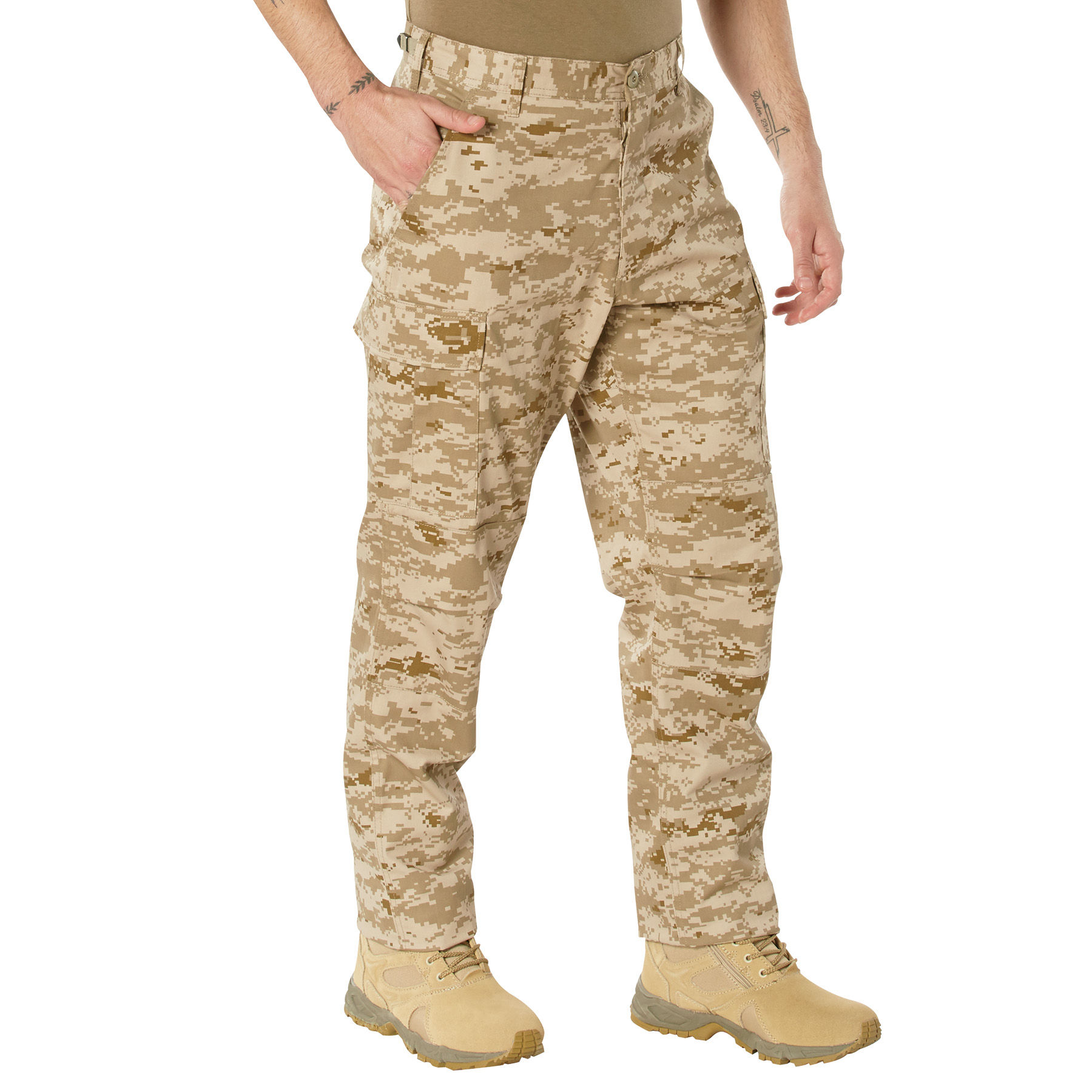
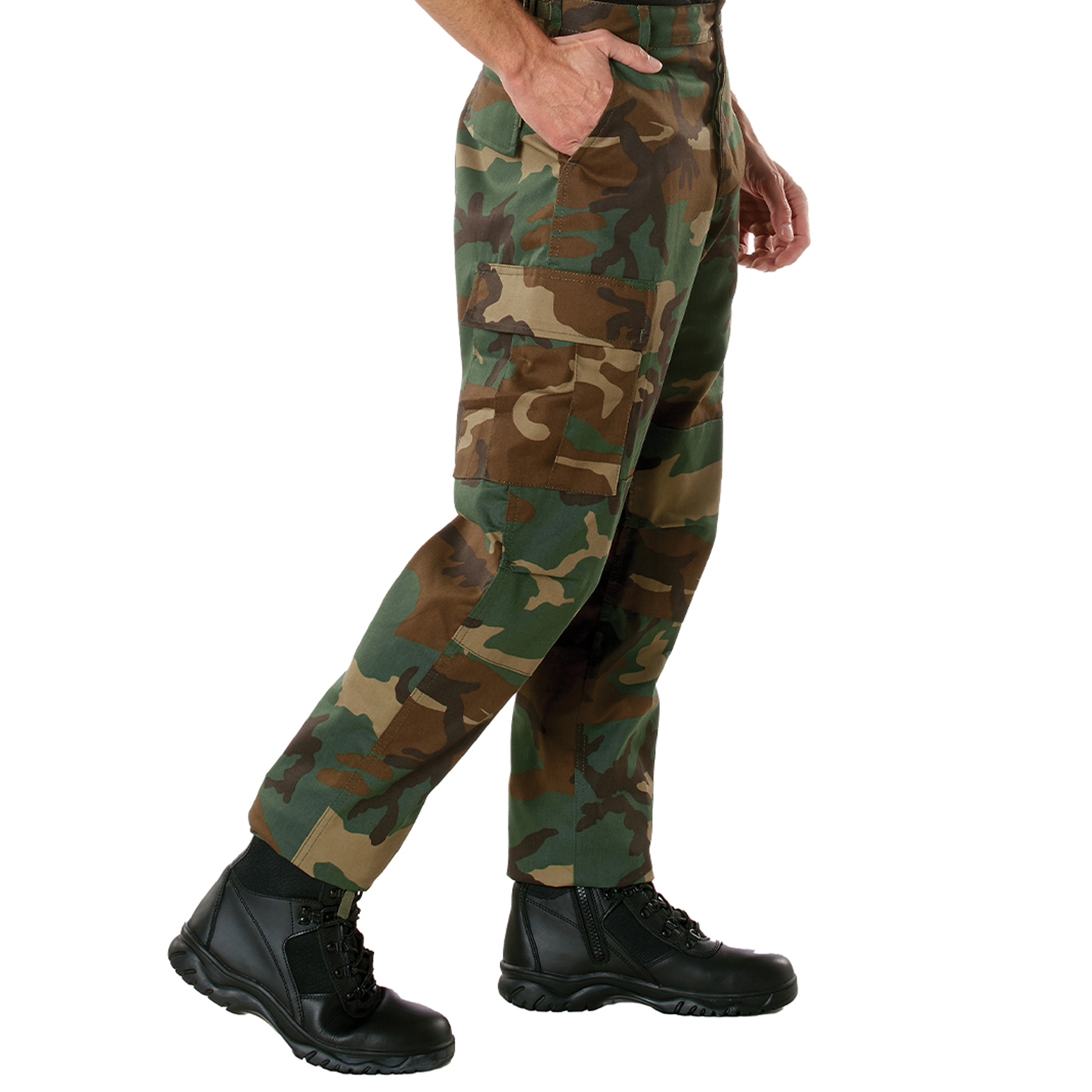
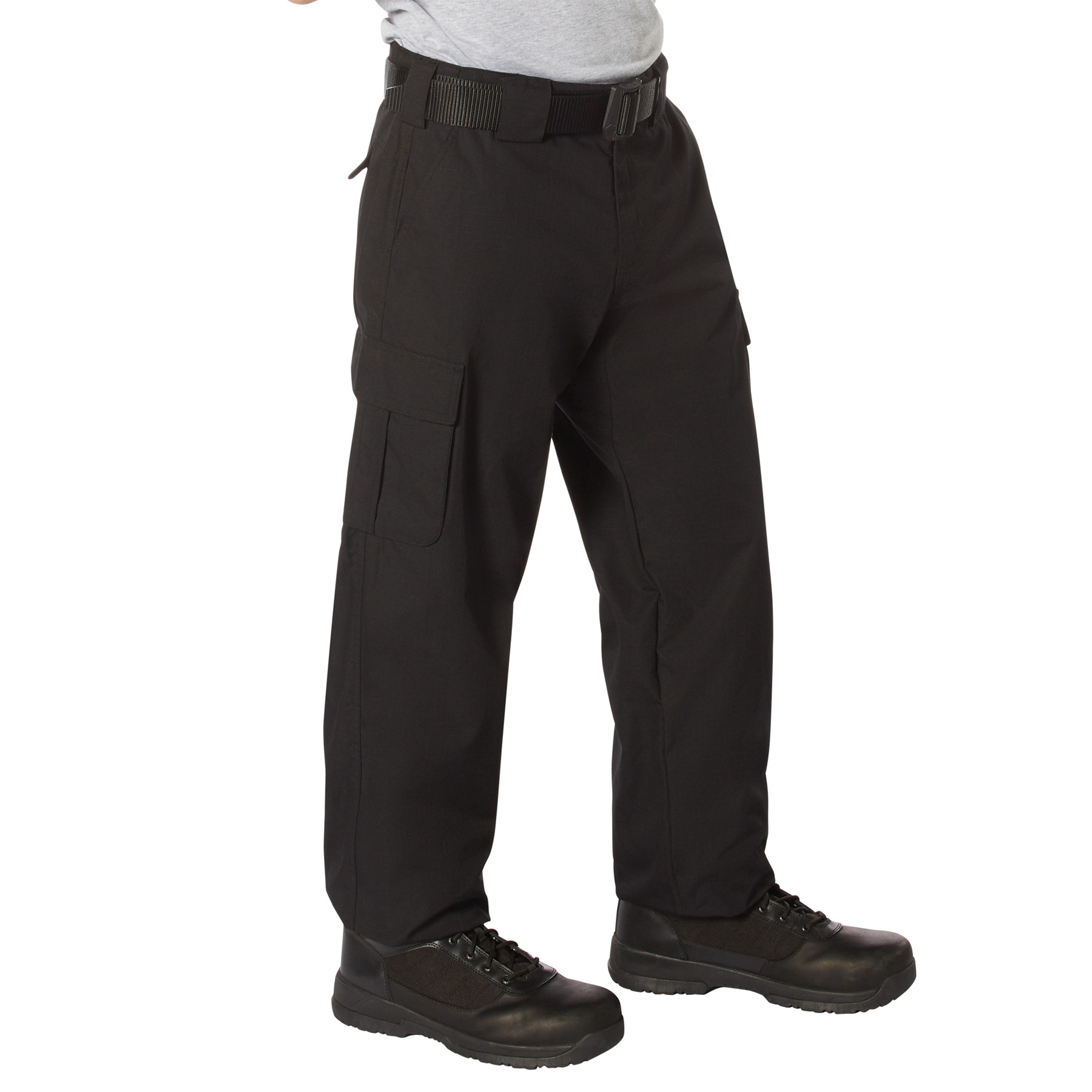
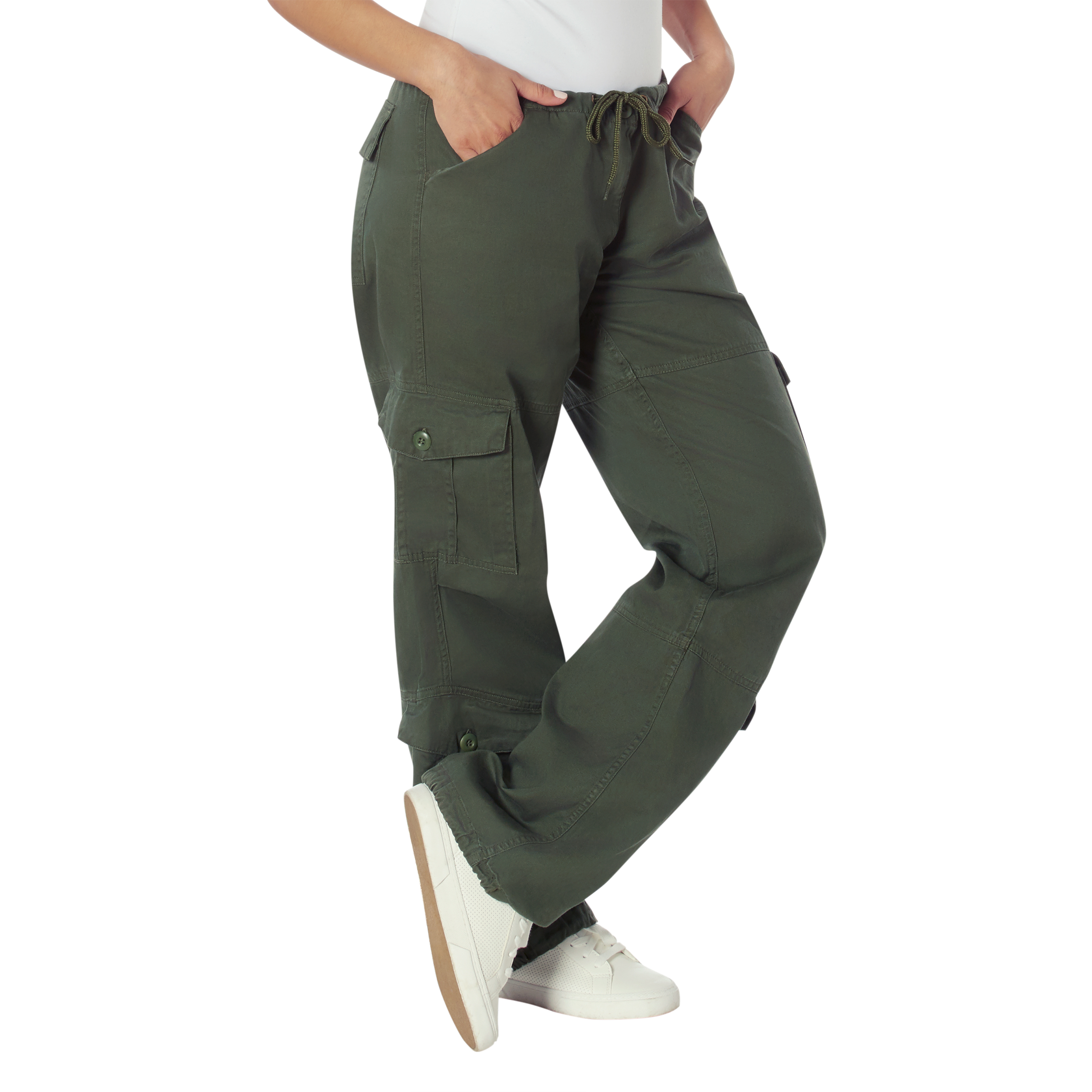
Both have cargo pockets and a relaxed fit, which is why people use the names interchangeably. But BDU pants follow military pattern specs and cargo pants are a broader commercial category that borrowed the look. The differences show up in construction, pocket placement, and how they hold up over time.
Side-by-Side Breakdown
Use Case
BDU pants were designed for field duty: durability, ventilation, and pockets sized for military gear like maps and field dressings. Cargo pants cover a wider range, from work pants to streetwear, with pocket sizes and placement that vary by brand and aren’t standardized to any spec. If you need pants that match a specific issue pattern or work alongside other military-style gear, BDU is the way to go.
Durability
BDU pants typically use heavier ripstop or twill fabric and reinforced seating and knees, built to survive crawling, kneeling, and repeated washing. Cargo pants range from lightweight fashion fabrics that won’t survive real work to heavy-duty workwear versions that rival BDU toughness. The BDU spec sets a durability floor that commercial cargo pants don’t have to meet.
Price
BDU pants tend to be priced competitively because they’re often made in bulk to a standard spec without brand markup tied to fashion trends. Cargo pants can range from budget to premium depending on brand positioning, and fashion-oriented cargo pants often cost more for less durable material.
Fit
BDU pants run true to military sizing, which uses a waist and inseam combination and tends toward a roomier, straight-leg cut for movement and layering. Cargo pants fit all over the map depending on brand, from slim tapered cuts to relaxed fits, so sizing isn’t standardized the way BDU sizing is.
The Recommendation
If you want durability you can count on, pockets sized for actual gear, and sizing that’s predictable once you know your numbers, go with BDU pants. If you want a more tailored look, are pairing with non-tactical clothing, or prefer a specific cut that BDU doesn’t offer, look at quality cargo pants from a workwear or outdoor brand instead of a fashion label. For field work, hunting, or anything where the pants need to perform, BDU is the safer bet.
FAQ
Are BDU pants the same as combat pants?
BDU stands for Battle Dress Uniform, and the pants are essentially the trouser component of that uniform, so yes, they’re combat pants by another name.
Do BDU pants run big?
They run roomier than typical commercial cargo pants due to their straight-leg military cut, so many people find their usual waist size fits but with extra room through the leg.
Can BDU pants be worn for everyday use?
Plenty of people wear BDU pants daily for work or casual use, they’re just heavier and roomier than typical commercial pants.
What’s the main difference in pocket placement between BDU and cargo pants?
BDU pants follow a standardized pocket layout sized for military gear, while cargo pants pocket placement and size vary by brand with no fixed standard.
flhq_gear_guide category=”bdu-pants” limit=”4″]