
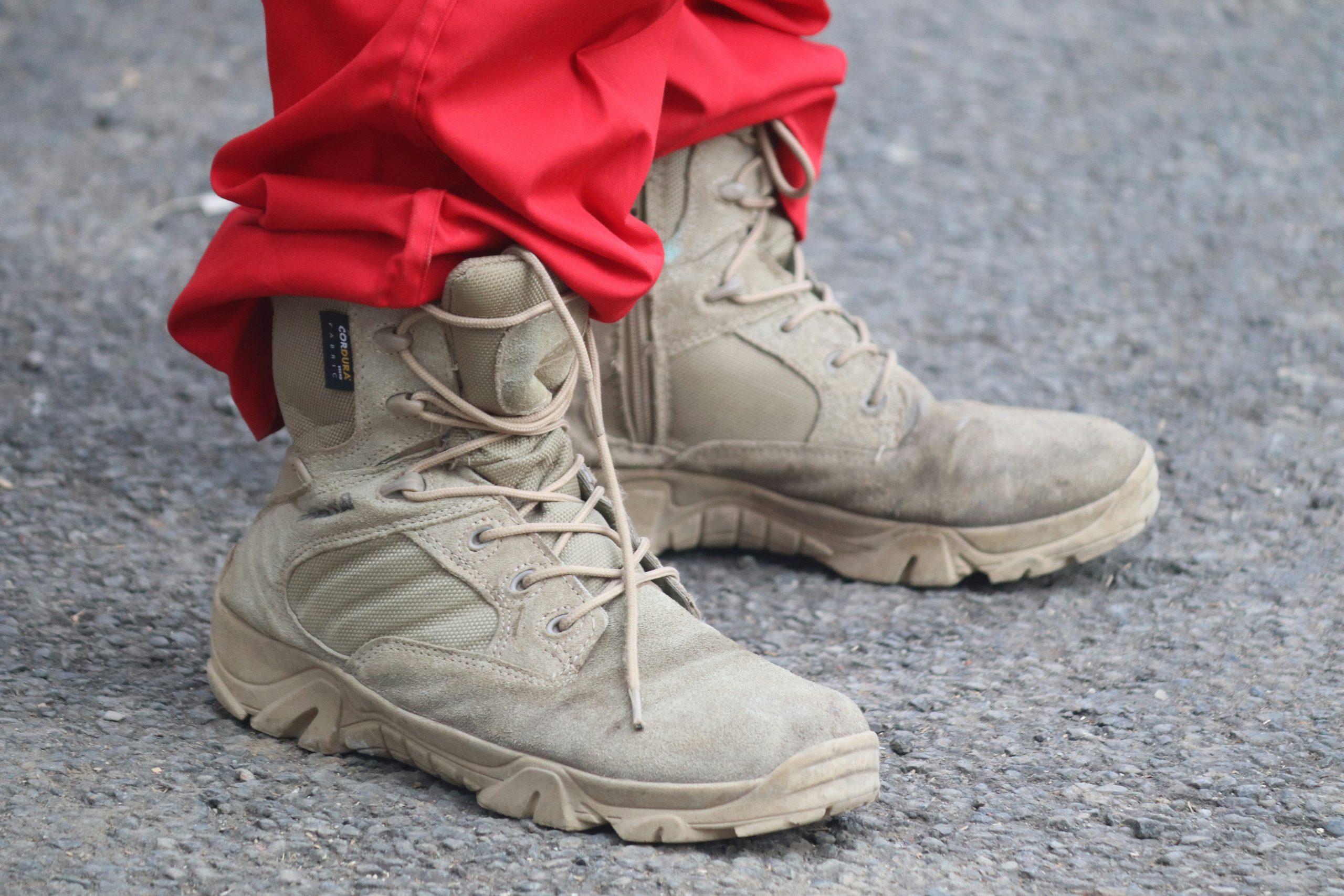
How to Break In Tactical Boots Fast
Breaking in tactical boots should be a gradual fit check, not a race. Different models use different combinations of leather, suede, synthetics, mesh, waterproof membranes, coatings, adhesives, and composite components. A shortcut that is harmless for one material can damage another.
1. Start with the right size
A bad fit is not a break-in problem. Before extended wear, confirm the manufacturer’s sizing guidance, ordinary toe room, secure heel fit, and overall width. If the boot causes painful pressure or persistent heel movement during a short indoor check, reassess the size or model instead of forcing it to soften.
2. Wear the socks you plan to use
Sock thickness changes how a boot fits. Use the same type of socks you expect to wear at work or during ordinary use so the trial reflects the real setup.
3. Increase wear gradually
Begin with short periods at home or in another clean, low-risk setting. Walk normally and increase wear only when the fit remains comfortable. There is no universal number of hours or days because materials, construction, foot shape, and use differ.
4. Let the boot flex naturally
Normal walking lets the upper and sole flex at their intended points. Do not crush, sharply fold, hammer, or mechanically abuse the boot to speed the process.
5. Adjust the lacing
Small lacing adjustments can change heel hold or pressure across the instep. Keep the fit secure without overtightening. No single lacing pattern fixes every foot shape, boot last, or sizing problem.
6. Match care to the material
Use only care products and methods approved for the exact boot. Leather conditioner is not universal, and oils can change some finishes or interfere with coatings. Aggressive heat, moisture, or stretching can damage leather, synthetics, membranes, adhesives, or composite construction.
7. Stop when the fit is wrong
Stop and reassess if painful hot spots, pinching, numbness, or persistent slippage develops. A different size, width, or model may be the safer answer. Breaking in should not mean enduring a boot that does not fit.
Plan the full setup
Browse current tactical boots by construction and height, or compare documented features in our long-shift tactical boot guide. The Footwear Accessories category includes laces, insoles, and care items, but compatibility still depends on the exact boot and material.