
How to Size a Plate Carrier Correctly
A plate carrier that doesn’t fit right either rides up into your throat when you sit down or sags low enough to leave your stomach exposed. Getting the size right means measuring correctly and accounting for the plates themselves, not just your torso.
Measuring for Plate Size First
Plate size is measured by height and width in inches, with common sizes running from small (around 8×10) up to large (around 11×14) and XL beyond that.
Torso length: Measure from the base of your throat (where a t-shirt collar sits) down to your belly button. This gives you a rough guide for plate height, since the plate should sit between the collarbone notch and the navel without extending past either.
Torso width: Measure across your chest at its widest point. The plate shouldn’t extend past your sides into your arm’s range of motion, since this restricts movement and can cause chafing during extended wear.
| Body Build | Typical Plate Size |
|---|---|
| Smaller frame / shorter torso | Small (8×10 or similar) |
| Average build | Medium (10×12) |
| Larger frame / longer torso | Large (11×14) |
| Very large frame | XL or custom |
Sizing the Carrier Itself
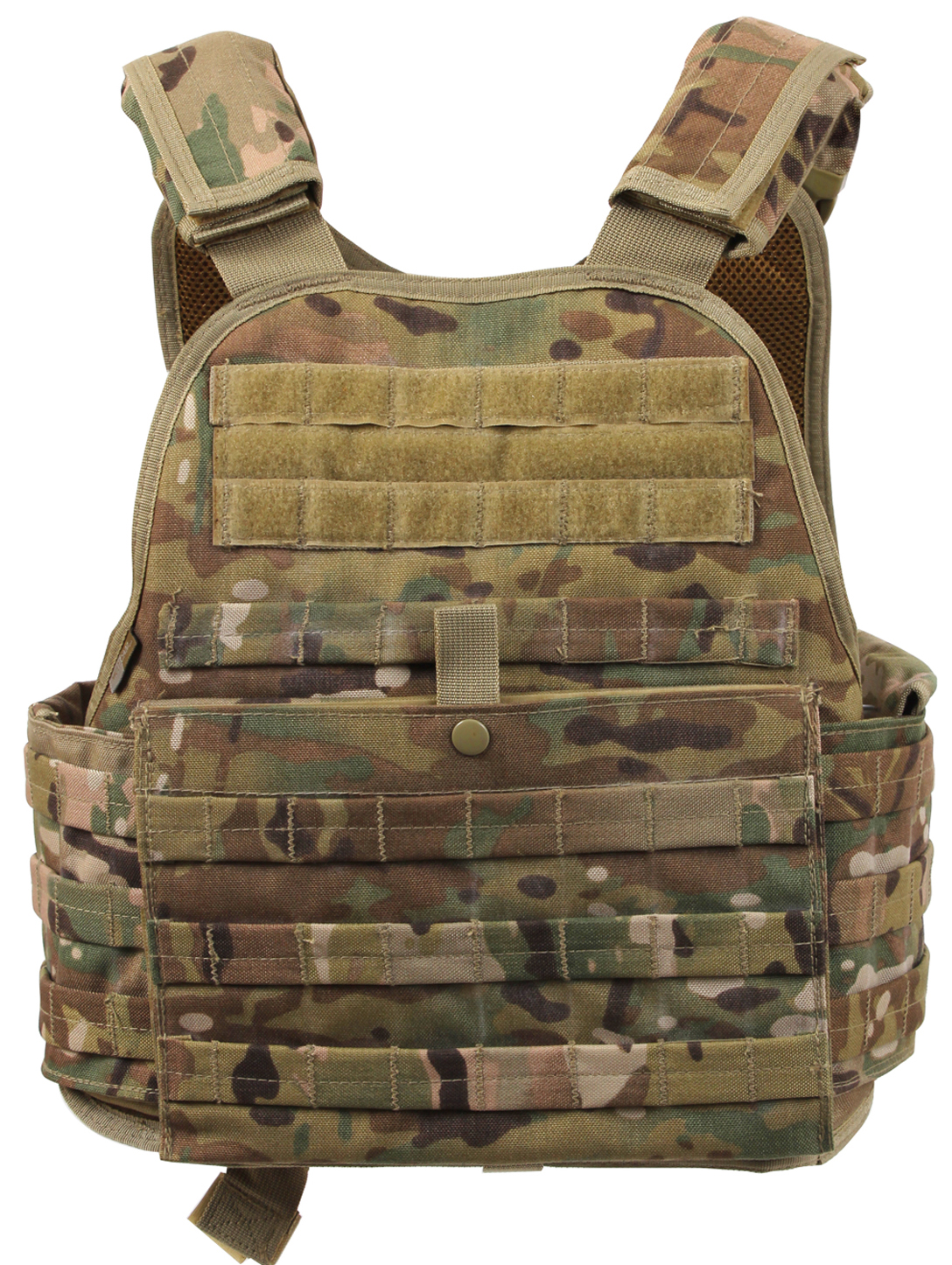
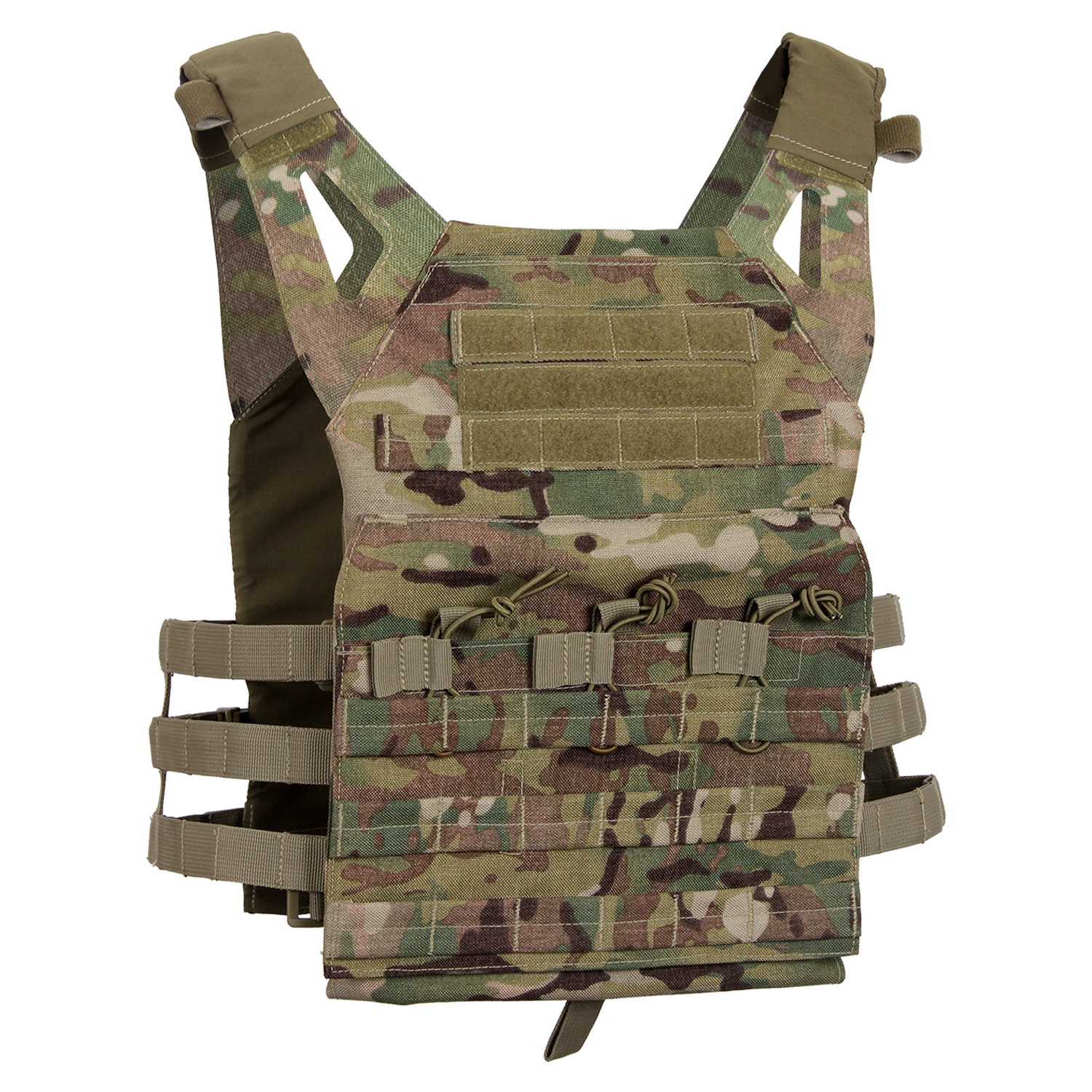
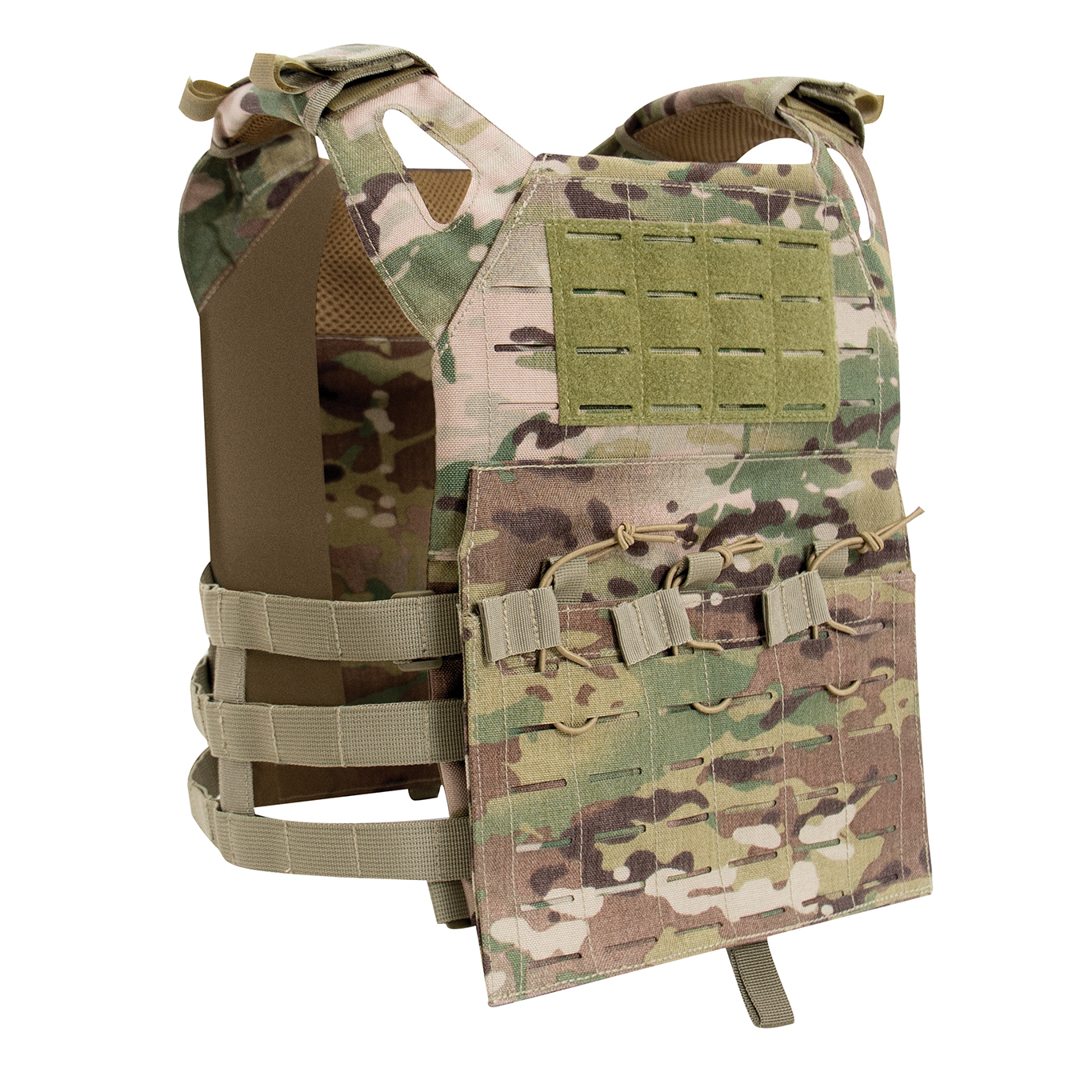
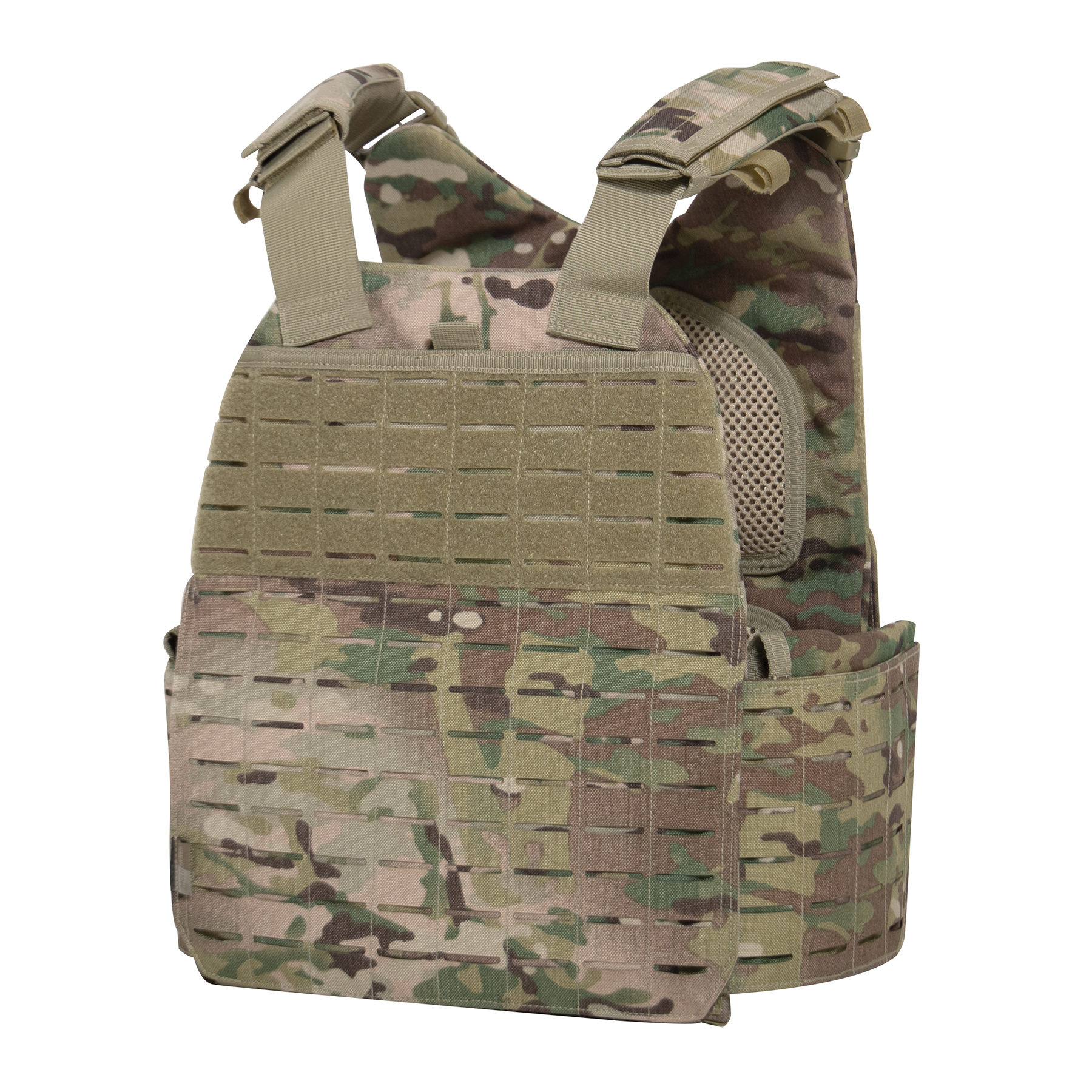
Once you know your plate size, the carrier needs to match. Most carriers are sized to specific plate dimensions, so check the carrier’s spec sheet against the plates you’re using rather than assuming “medium plate means medium carrier” across brands.
Cummerbund and side straps: These should let you tighten the carrier enough that the plates don’t shift when you move, but not so tight that you can’t take a full breath. A good test is bending forward and side to side; if the plate digs in or the carrier rides up dramatically, the sizing or adjustment is off.
Shoulder straps: Adjust these so the top of the front plate sits about an inch below your collarbone notch. Too high and the plate restricts your neck movement and digs in when you look down. Too low and it leaves your upper chest exposed.
Accounting for Layers
If you’re wearing a plate carrier over a uniform, jacket, or additional layers in cold weather, account for that bulk when sizing. A carrier that fits perfectly over a t-shirt might be uncomfortably tight over a jacket.
Most carriers have enough adjustment range in the cummerbund and straps to handle moderate layering changes, but if you regularly switch between minimal and bulky layers, size toward the bulkier scenario and tighten down for lighter days.
Final Fit Check
Put on the carrier with plates inserted, tighten everything down, then do these checks:
Sit down in a vehicle seat or chair and confirm the front plate doesn’t push into your throat or chin.
Bend forward at the waist and confirm the bottom of the plate doesn’t dig into your stomach or hip bones.
Raise both arms overhead and reach across your body to confirm the side coverage doesn’t restrict your range of motion.
FAQ
How do I know what plate size I need?
Measure your torso from the collarbone notch to your belly button for height, and across your chest at its widest for width, then match that to the closest standard plate size.
Should a plate carrier fit tight or loose?
Tight enough that the plates don’t shift when you move, but loose enough to take a full breath and bend without the carrier digging in.
Does the plate carrier size need to match the plate size exactly?
Yes, generally. Carriers are built around specific plate dimensions, so check the carrier’s spec sheet against your plate size rather than assuming sizes match across brands.
Will a plate carrier still fit if I wear a heavy jacket underneath?
Most carriers have adjustment room for moderate layering, but if you frequently wear bulky jackets, size the carrier with that bulk in mind and tighten down on lighter days.